


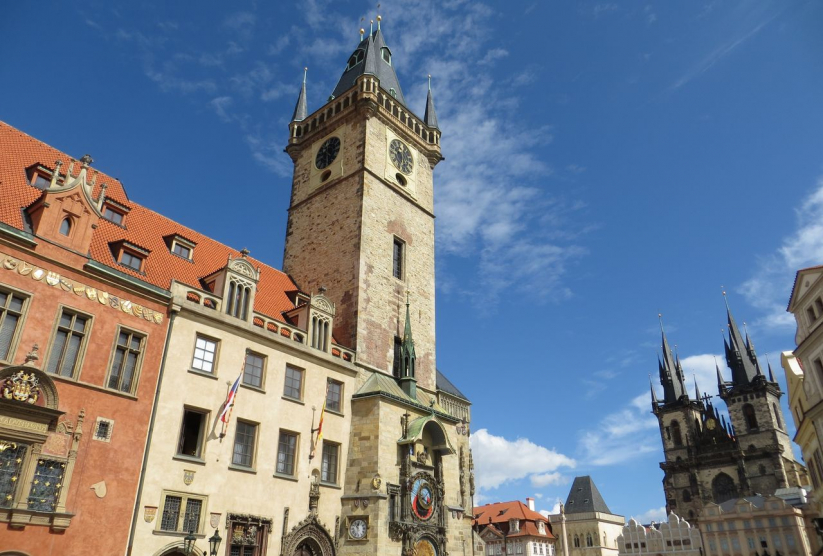
The Old Town Hall is one of the most beautiful monuments of the historical centre of Prague and was founded by permission of the Czech King John of Luxembourg in 1338.
It was built by gradually buying up individual townhouses and joining them into a single unit. Today it consists of five historic houses that bear elements of almost all styles.
Currently, the Old Town Hall is used for the ceremonial purposes of the Mayor of Prague, who receives the most important visitors to the city here.
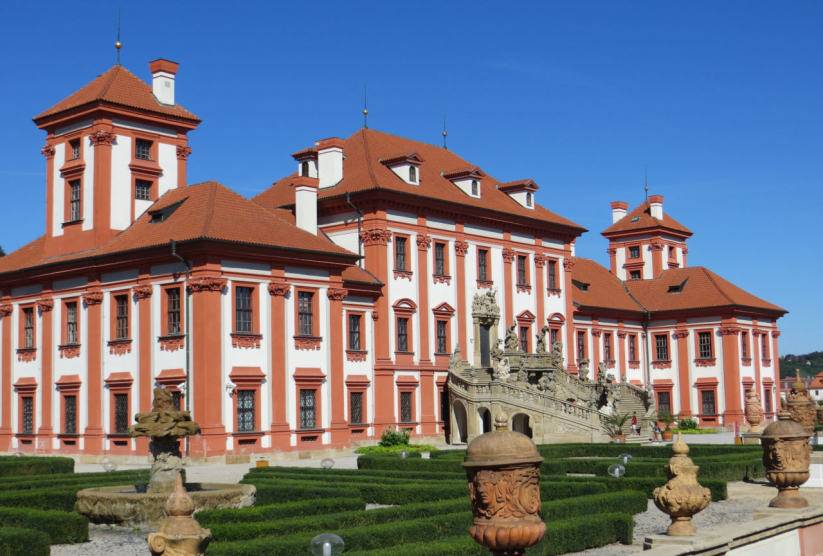
The Troja Castle (Troja Chateau) is a Baroque building in the Troja district of Prague located in the immediate vicinity of the Prague Zoo on the right bank of the Vltava River.
The castle should be called a villa. It is an echo of the splendid Roman suburban villas that its builder Václav Vojtěch Count of Sternberk saw on his travels. He started the construction in 1679, as his summer residence and also to obtain a title of nobility. He stayed here with his wife Klara and daughter.
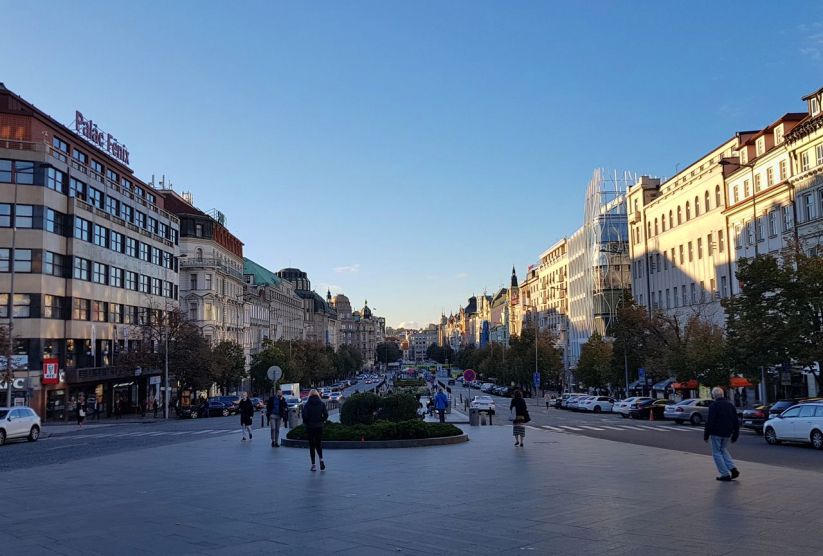
Wenceslas Square (colloquially known as Wenceslas Square, formerly St. Wenceslas Square, formerly the Horse Market) was established when Charles IV founded the New Town in 1348. It is one of the main squares in Prague's New Town and the second largest in the Czech Republic.
The square is 750 m long with an area of approximately 45,000 m² and the shape of an elongated rectangle sloping from the dominant National Museum past the equestrian statue of St. Wenceslas to the Mostek (the border of the Old Town).
It is home to theatres, cinemas, banking houses, restaurants, hotels, many small and large shops and administrative centres.
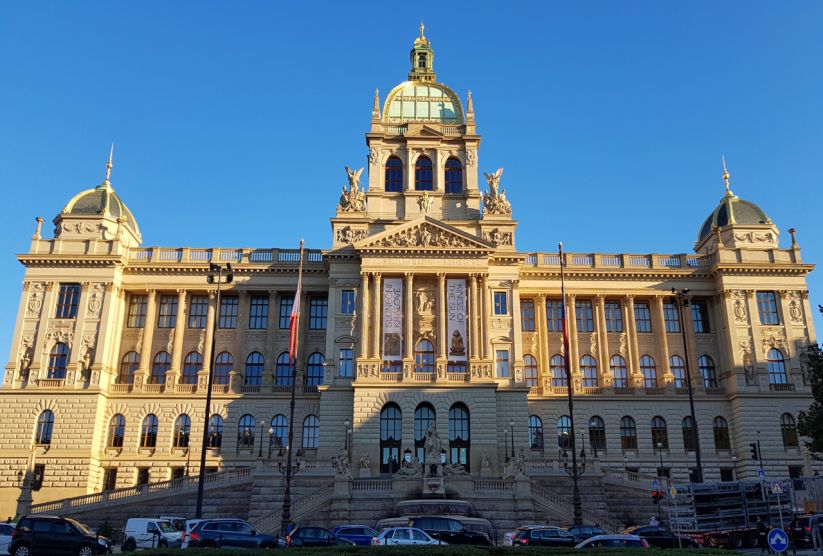
The National Museum in Prague is the largest and oldest museum institute in the Czech Republic with collection, scientific, educational and methodological functions. It was founded in 1818 as the Patriotic Museum.
The most important historical building of the National Museum is Neo-Renaissance and forms a dominant feature of the entire Wenceslas Square. It was built according to the project of the architect Josef Schulz with a central pantheon space. The project was chosen from 27 entrants in the competition because it emphasised monumentality above all. The building was opened in 1891.
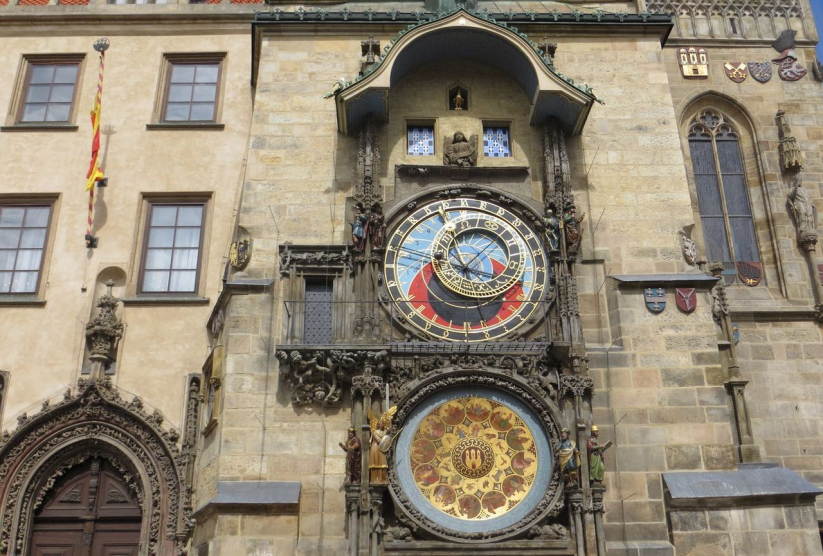
The Old Town (Prague) Astronomical Clock is a medieval astronomical clock showing not only the time and date, but also the position of the Sun, phases of the Moon, astronomical cycles and holidays of the Christian calendar.
The astronomical clock is located on the south side of the tower of the Old Town Hall in Prague. The first historically documented mention of the astronomical clock is found in a document dated 9 October 1410.
It is the last technical monument in the world still capable of measuring Babylonian (sidereal) and Old Czech time. It shows the movements of cosmic bodies and every full hour the astronomical clock is animated by marching figures of the apostles above the astronomical dial and moving statues on the sides.